
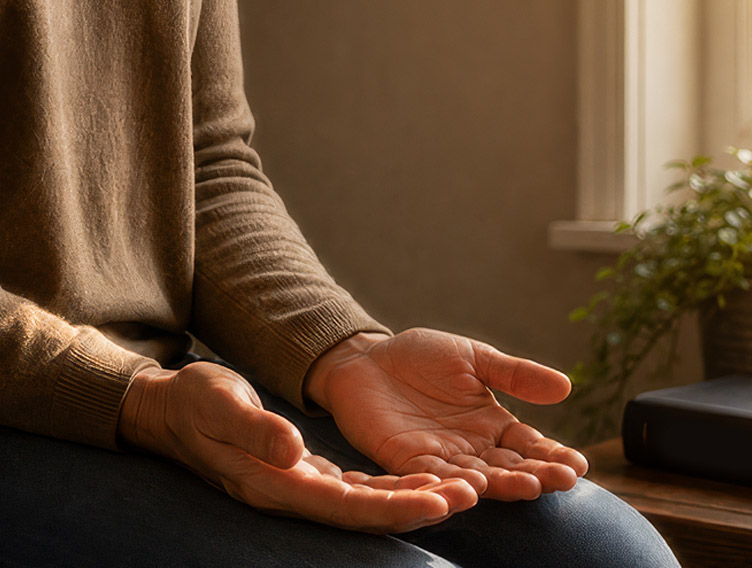
Religion and spirituality are often spoken of as if they were the same — but there’s a profound difference between themWhen fear causes us to clench our fists, prayer invites us to open our hands, receive God’s transforming presence, and become agents of grace in the world.
We live in a fear-driven world. Much of our culture is shaped by anxiety, self-protection, outrage, and the deep desire to control what feels uncertain. Unfortunately, that fear often follows us into prayer.
We may come before God with clenched fists, not physically perhaps, but spiritually. We hold tightly to our desires, our concerns, our anger, our loved ones, our outcomes, and our need for protection. We pray as though the purpose of prayer is to convince God to act according to our wishes.
But what if prayer is not primarily about getting God to do what we want?
What if prayer is also about opening ourselves to what God longs to do in us?
In Matthew 6:7-15, Jesus teaches His disciples how to pray. The Lord’s Prayer is not built around fear, manipulation, or performance. It begins with trust: “Our Father.” It centers on God’s kingdom: “Your kingdom come, your will be done.” It includes daily need, forgiveness, protection, and surrender. It is deeply personal, but it is also deeply formative.
Prayer, in the way of Jesus, shapes us.
It forms us into people who can receive God’s presence and embody God’s compassion. It reorients us away from fear and toward faith. It moves us from grasping for control to becoming available to God.
Henri Nouwen, in his book With Open Hands, describes prayer as a movement from clenched fists to open hands. A clenched fist represents fear, control, resistance, and self-protection. An open hand represents surrender, trust, receptivity, and availability.
This does not mean our fears are unimportant. It does not mean our concerns, longings, griefs, or hopes should be ignored. God welcomes all of it. But open-handed prayer places those concerns in the larger context of God’s emerging reign in the world.
Instead of praying only, “God, fix this for me,” open-handed prayer also asks, “God, how are You inviting me to participate in Your grace here?”
Instead of praying only for protection from a fearful world, we begin to ask how God might make us more compassionate within it.
Instead of asking only for relief, we begin listening for transformation.
This is a major shift. Prayer becomes less about leveraging God and more about listening to God. It becomes less about shaping God’s actions and more about allowing God to shape us.
Open-handed prayer creates sacred space for God to nurture us into more faithful followers of Jesus. It makes us more spiritually sensitive to our daily encounters. It helps us see beyond the hedges of our own lives so we can notice the fears, concerns, and longings of others.
In this way, prayer becomes more than intercession. It becomes formation.
One common misconception is that prayer is mostly talking to God so God will do what we want. But prayer is also listening. It is learning to see the world from God’s perspective. It is becoming, as one image puts it, a glove on the hand of God — someone through whom God can touch the world with compassion, grace, and justice.
Praying with open hands shifts our focus from what we might get from God to what God longs for us to experience and do. It moves us from fear of loss to the generative power of faith.
A simple practice can help us begin.
Set aside 15 to 20 minutes a day for contemplative prayer. Begin with a devotional resource such as Pray As You Go, Lectio 365, or quiet Taizé music. Keep a pen and paper nearby. If persistent worries or tasks come to mind, write them down so you can return to listening. Sit with your hands open as a physical reminder of your desire to receive from God. Ask God what He may be inviting you to notice, surrender, receive, or become today.
Then close with gratitude.
Thank God for the opportunity to be an agent of God’s reign in the world.
Over time, this kind of prayer can reshape us. It can loosen fear’s grip. It can soften our clenched fists. It can open our hearts to the things that break the heart of God.
And perhaps that is one of the deepest gifts of prayer: not simply that God changes our circumstances, but that God changes us within them.
Final Thought
My own spiritual journey has been deeply shaped by learning to pray with open hands. For a long time, prayer was often my attempt to get God to calm my fears, fulfill my desires, and protect the people I love. Those longings were not wrong, but they were incomplete.
Over time, open-handed prayer began to shift something in me. I was still invited to bring my fears and concerns to God, but I began to hold them within a larger story — the story of God’s reign emerging in my own sphere of influence.
Prayer became less about asking God to build higher hedges around my life and more about asking God to help me see beyond them.
That shift changed me.
It helped me recognize the fears, wounds, and longings of others. It invited me to become more compassionate, more attentive, and more available to God’s work in the world.
To pray with open hands is to ask God to break our hearts with the things that break God’s. And in that sacred opening, we become not only people who pray, but people through whom God’s love can move.
#Prayer
#OpenHandedPrayer
#SpiritualFormation
#ChristianSpirituality
#FaithOverFear
#ContemplativePrayer
#Matthew6
#LordTeachUsToPray
#HenriNouwen
#ListeningPrayer
#ChristianLiving
#SpiritualDirection
#GraceInAFearfulWorld
#PrayerPractice
#FollowingJesus