
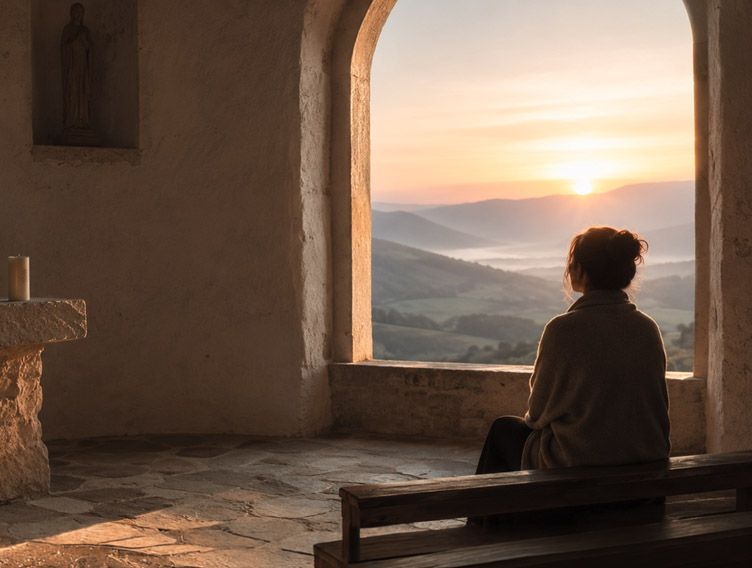
In a world filled with noise, influence, and constant stimulation, silence becomes a sacred friend that helps us listen to God, reconnect with our soul, and rediscover who we are.
We live in a world of constant noise.
There is always something calling for our attention — a notification, a headline, a podcast, a video, an advertisement, a social media influencer, or a voice telling us what to buy, follow, achieve, or become.
The surrounding culture rarely invites us to be still.
Instead, it tells us that the best version of ourselves is found somewhere “out there.” If we buy the right product, adopt the right habit, follow the right person, or achieve the right goal, then we will finally experience life more fully.
That message is powerful.
And it is difficult to break free from.
The spiritual journey offers a different path. It invites us not to add more noise, but to make room for silence. It invites us to befriend silence as a sacred companion — one that helps us ask deeper questions about our lives, relationships, work, longings, fears, and identity.
Silence creates space.
Not empty space, but generative space.
It gives us room to listen for what is churning beneath the surface. It allows us to notice the questions we have been avoiding. It helps us hear the quiet cry of the soul and the gentle voice of the Spirit.
In a culture shaped by influencers, silence may feel counter-cultural, even suspicious. We may fear that silence will lead to loneliness, isolation, or sadness. And while there are seasons of deep emotional pain that should be entered with the support of a therapist, pastor, or spiritual director, the Christian tradition has long recognized silence as one of the most transforming spiritual disciplines.
Silence is not the enemy of the soul.
For many, it becomes the place where the soul finally feels safe enough to speak.
Throughout the Gospels, we see Jesus withdrawing to quiet places to pray. He does this not because His life is empty, but because His life is full. He steps away from crowds, demands, expectations, and ministry pressure to be alone with God.
If Jesus, the Son of God, made space for silence and solitude, then we should not be surprised that our own lives require the same.
Jesus’ identity and strength for His mission were deeply connected to His practice of pulling away. Silence was not an escape from His calling. It was part of how He remained rooted in it.
That matters for us.
If we want to embody the life of the gospel, we need sacred space where we can listen — to God, to the Spirit’s invitation, and to the deeper longings of our soul. Without silence, we may spend our lives reacting to the loudest voices around us rather than responding to the still, steady presence of God within us.
Parker Palmer, in A Hidden Wholeness, offers a helpful image. He suggests that the soul is not something we can force into the open. It is more like encountering a deer in the forest. A deer cannot be chased, demanded, or manipulated into appearing. It may only emerge when there is enough stillness, patience, and safety.
The soul is similar.
It cannot be bullied into honesty. It cannot be coaxed out by noise. It comes forward when it senses acceptance. Silence creates the kind of inner clearing where the soul may begin to trust that it is safe to be seen.
This is why befriending silence is so important.
Silence is not merely the absence of sound. It is the presence of attention. It is the practice of creating enough stillness to listen for what is true.
In silence, we may begin to ask:
Who am I becoming?
What am I afraid to face?
What do I truly desire?
What is God inviting me to notice?
What has my soul been trying to say?
Where have I allowed outside voices to define me?
These are not quick questions. They cannot be answered by scrolling, consuming, achieving, or purchasing. They require patience. They require courage. They require quiet.
Befriending silence has been one of the most transforming aspects of my own spiritual life. There is little in our noisy world that affirms this practice, but silence has become one of the primary ways I contend with the pressure and demands of ordinary life.
Like any friendship, silence becomes richer the longer we invest in it.
At first, it may feel awkward. We may notice restlessness, distraction, or discomfort. We may find that our minds are crowded with concerns. But over time, silence becomes less like an empty room and more like a trusted friend.
It becomes a place of return.
A place where God meets us.
A place where we listen more honestly.
A place where our identity can be rooted not in what we acquire, achieve, or project, but in who we are before God.
To begin, set aside 15 minutes in your day to explore the spiritual discipline of silence. If you are a morning person, try it early in the day. If you are a night owl, try it near the end of the evening.
You might begin by listening to a few moments of contemplative music, such as Taizé, as a transition from cultural noise into sacred silence. Keep a pad and pen nearby so you can jot down thoughts or concerns that come to mind. This helps you acknowledge them without letting them control your attention.
Then slow your breathing.
Quiet your mind.
Sit in stillness.
Listen for the Spirit. Listen for your soul. Listen without rushing to produce an answer.
If a thought, insight, longing, or invitation rises to the surface, write it down. Receive it gently. Do not force it. Do not judge it too quickly.
Simply make space.
The world will continue to be noisy. The influencers will continue to influence. The culture will continue to offer quick versions of identity, purpose, and fulfillment.
But silence offers a different gift.
It invites us to stop performing long enough to listen.
It invites us to encounter God beneath the noise.
It invites us to become more deeply human, more spiritually awake, and more honestly ourselves.
Final Thought
Befriending silence has become one of the most important friendships of my spiritual life.
Like any friendship, it did not become meaningful all at once. It required time, patience, trust, and repeated presence. At first, silence can feel uncomfortable because it removes the distractions we often use to avoid what is happening beneath the surface.
But over time, silence becomes a place of grace.
It becomes the place where we stop being shaped by the loudest voices around us and begin listening for the quiet voice of the Spirit within us.
Jesus often pulled away to quiet places when the demands around Him increased. His example reminds us that silence is not weakness, escape, or isolation. Silence can be strength. It can be grounding. It can be the sacred space where identity, calling, and compassion are renewed.
To befriend silence is to trust that God is not only found in the noise of activity, but also in the stillness where the soul is finally able to speak.
#BefriendingSilence
#SpiritualFormation
#ChristianSpirituality
#SilenceAndSolitude
#ContemplativePrayer
#ListeningToGod
#SoulCare
#SpiritualDirection
#SacredSilence
#InnerLife
#FollowingJesus
#ChristianLiving
#FaithPractice
#Stillness
#QuietWithGod