
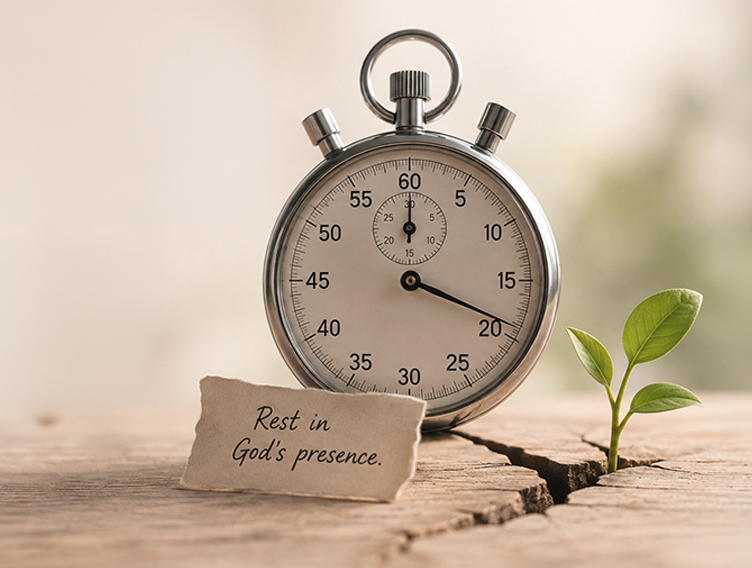
A Contemplative Christian Alternative to “Move Fast and Break Things”
We live in an age shaped by speed.
We are encouraged to respond immediately, grow constantly, produce visible results, and move quickly from one goal to the next. Mark Zuckerberg’s well-known mantra, “Move fast and break things,” captured the energy of the technological era and its desire for rapid innovation.
In the digital world, broken systems can often be repaired or replaced. But when this philosophy is applied to creation, community, relationships, and the sacred covenants of life, its limitations become clear.
Human beings are not software.
Relationships cannot always be restored with an update.
Communities and creation should not be treated as disposable resources.
The spiritual wisdom of the ages offers another pattern: slow down, listen, reflect, discern, and seek a pathway that promotes healing and human flourishing.
When Speed Controls Us
Speed itself is not always harmful. There are moments when quick action is necessary, and innovation can bring meaningful progress.
The problem begins when speed becomes our primary way of living.
When every decision feels urgent, we lose the opportunity to reflect. When every disagreement becomes a crisis, we lose the ability to listen. When those who challenge us are treated as enemies, we lose sight of their humanity.
A fast-moving culture rarely gives us time to ask whether our actions are healing what is broken or adding to the brokenness.
Slowing down creates room for truth. It helps us notice the fear, grief, anxiety, and ambition that may be influencing our decisions. It also allows us to become more attentive to the quiet movement of God.
The Prayerful Pattern of Jesus
Throughout the Gospels, Jesus repeatedly withdraws from activity to pray. Luke 6:12, Luke 9:18, Luke 9:28, and Luke 11:1 reveal this recurring rhythm.
Jesus does not allow urgency to determine every action.
Jesus creates sacred space to listen, pray, and discern.
The solitude of Jesus is not an escape from responsibility. This time apart prepares Jesus to return with clarity, compassion, and purpose. The example of Jesus reminds us that meaningful action flows from spiritual attentiveness.
Slowing down is not passivity.
It is preparation for faithful action.
From Fear to Healing
Sadly, some expressions of Christianity have adopted a pattern of breaking things rather than healing them.
This happens when fear becomes more influential than faith, when protecting our values becomes more important than respecting the humanity of others, or when strangers and opponents are treated as threats rather than neighbors.
Nothing could be more contrary to the radical love of God that followers of Jesus are called to embody.
Without reflection and prayer, cultural anxiety can easily be mistaken for spiritual conviction. Aggression can be called courage. Condemnation can be called truth. Fear can be presented as faith.
The contemplative tradition invites us to pause before speaking, listen before judging, and discern before acting.
It encourages us to ask a simple but important question:
Are we breaking things, or are we helping to heal them?
Monastic Wisdom for Everyday Life
For centuries, Christian monastic traditions have offered a pattern of prayer, silence, simplicity, community, and discernment.
Practicing this wisdom does not require joining a monastery.
A monastic rhythm can take shape within ordinary life. It may include a few minutes of silence in the morning, prayerful reading of Scripture, a pause before answering a difficult message, or an evening reflection on where God was present during the day.
Practices such as lectio divina, contemplative prayer, Sabbath, journaling, and spiritual reading help create space for the soul.
The purpose is not to escape work, family, or community. It is to allow our outward activity to flow from a deeper spiritual center.
Choosing Sacred Space
Many people say they would develop a spiritual practice if they could find the time.
But a world built around speed and productivity will rarely give us that time.
Sacred space must be chosen.
This does not necessarily mean adding another task to an already demanding schedule. It means reshaping the schedule so that prayer, listening, and discernment are not limited to whatever time remains.
Resources such as Pray As You Go and Lectio 365 can help establish a daily rhythm. Books on Benedictine, Cistercian, and contemplative spirituality can provide greater understanding and structure.
A spiritual director may also help us recognize God’s presence and direction. A small group of spiritual companions can offer encouragement and accountability without becoming another program to manage.
Becoming a Servant of Healing
My own journey has included learning that visible results and spiritual wholeness are not always the same thing. Ministry and leadership can reward speed, change, and measurable progress, yet those rewards can become shallow when they are disconnected from prayer and discernment.
Over time, practices such as lectio divina, listening, prayer, and reflection have helped create a healthier rhythm—one in which action can flow from spiritual attentiveness rather than constant urgency.
The goal is not simply to move more slowly.
It is to become attentive enough to hear God, courageous enough to resist fear, and compassionate enough to choose healing.
A Better Way Forward
The world may continue telling us to move fast and break things.
The way of Jesus invites us to slow down, listen carefully, discern faithfully, and help heal what is broken.
#SlowDownAndHeal #ContemplativeChristianity #SpiritualFormation #SacredRhythms #PrayerAndDiscernment #LectioDivina #ContemplativePrayer #FaithOverFear #ChooseHealing #WayOfJesus #SacredSpace #ChristianMeditation